
DIB

Managed Security (MSSP) Shouldn’t Mean Losing Control of Your Environment

If you’re evaluating an MSSP or managed security services provider, especially for CMMC or GCC High, you’ve probably heard this before:

“We’ll take care of everything.”

On paper, that sounds like exactly what you want.

In reality, it often creates a different problem.

Not right away, but over time.


The Reality Most IT Teams Run Into

Most organizations don’t start looking for an MSSP because they want less control.

They’re looking because:

  • CMMC requirements are complex and time-consuming
  • Security tools are spread across multiple systems
  • Their internal IT team is already stretched thin

So they bring in a managed security provider to help.

But here’s what typically happens with traditional MSSP models:

  • The provider manages configurations
  • The provider handles monitoring
  • The provider owns reporting

And gradually, your internal team becomes less involved in how the environment actually works.

You still “own” the environment on paper, but day to day, you rely on someone else to interpret it.

That’s where the risk starts to build.


Where the Traditional MSSP Model Falls Short

A lot of managed security services providers are built for efficiency, not transparency.

They are structured to:

  • Standardize deployments
  • Centralize management
  • Limit back-and-forth with the client

Operationally, that makes sense.

But it creates a gap.

Over time, your team can lose visibility into:

  • Where security controls are implemented
  • How configurations are set across Entra, Defender, and Intune
  • What evidence actually supports your CMMC compliance posture

Then when questions come up, whether from leadership or a C3PAO, the response becomes:

“We’ll need to check with our provider.”

That is not where you want to be, especially during an audit.


You Shouldn’t Have to Choose Between Support and Control

One of the biggest misconceptions in the MSSP space is that you have to pick one of two paths:

  • Manage everything internally and overload your team
  • Outsource everything and give up visibility

That is a false choice.

The right approach is somewhere in the middle.

You should be able to:

  • Offload the complexity
  • Free up your IT team’s time
  • Bring in specialized CMMC and security expertise

Without losing an understanding of your own environment.

Your team should still be able to explain:

  • How your environment is designed
  • Where controls are implemented
  • How compliance requirements are being met

At the same time, they should not be the ones chasing down every setting or validating everything manually.


What Managed Security Should Actually Look Like

A modern MSSP, especially in a CMMC or GCC High environment, should act as an extension of your IT team.

Not a replacement.

That shows up in a few important ways.


1. You Still Own the Environment

Your systems, your architecture, and your compliance posture remain yours.

You are accountable for them, so you should understand them.


2. Your Team Stays Involved

You are not just receiving reports.

Your team knows:

  • What has been configured
  • Why it is configured that way
  • How it maps to CMMC or NIST 800-171 requirements

That understanding is what makes compliance sustainable.


3. You Are Not Dependent on a Vendor to Explain Things

You should not need to route every question through a provider.

Your team should be able to walk through your environment and explain it with confidence.

That matters for both operations and audits.


4. The Burden Is Reduced for Your Team

Your IT team already handles:

  • End users
  • Infrastructure
  • Ongoing projects

Compliance should not take over their entire workload.

The right MSSP model removes the heavy lifting while keeping your team connected and informed.


How Rolle IT Approaches Managed Security (MSSP)

At Rolle IT, we have seen both extremes:

  • Teams trying to do everything internally and burning out
  • Organizations outsourcing everything and losing visibility

Neither model holds up long term.

So we built our approach around a simple idea:

Support the team without replacing the team.


We Work Alongside Your IT Team

We do not deploy a one-size-fits-all solution and step away.

We work with your team to align your environment to:

  • Your workflows
  • Your business requirements
  • Your CMMC and security needs

That way, what gets built actually works for your organization.


We Provide Built-In Strategic Consulting

Security and compliance are not static.

Your environment will change:

  • New tools are introduced
  • Access expands
  • Contracts evolve

We help make sure your environment evolves with those changes while staying aligned to compliance requirements.


We Reduce the Time Burden Without Losing Visibility

One of the biggest benefits of working with an MSSP should be getting your team’s time back.

Not by removing them from the process, but by:

  • Streamlining validation
  • Centralizing visibility
  • Reducing manual effort

Your team spends less time chasing details and more time supporting the business.


We Focus on Clarity, Not Just Reporting

With tools like Cari Assurance, you are not just getting a report.

You get:

  • Visibility into your environment
  • Validation of configurations
  • A clear understanding of your compliance posture

That is what allows your team to stay informed and in control.


For CMMC, Control Still Matters

If you are working toward CMMC compliance, this is even more important.

At the end of the day:

  • Your organization is accountable
  • Your IT team is expected to understand the environment
  • Your controls need to be defensible

That responsibility does not go away when you bring in an MSSP.


Final Thought

Managed security services should make your IT team more effective.

They should reduce workload, bring expertise, and simplify compliance.

But they should never come at the cost of visibility or control.

You should not have to trade ownership for support.

At Rolle IT, we do not believe in that trade-off.

We work as an extension of your IT team to help you build, understand, and maintain your environment over time.

We take the burden off your team without taking control away.

Managed Security (MSSP) Shouldn’t Mean Losing Control of Your Environment Read More »
CMMC Compliance in GCC High: Real-Time Visibility for DoD Contractors

A smart, integrated CMMC platform built for Microsoft GCC High (GCCH) environments handling CUI

If your organization is a Department of Defense (DoD) contractor, compliance is no longer something you prepare for once a year.

CMMC requires continuous visibility, real system alignment, and provable control implementation.

Most organizations struggle because they don’t actually know:

  • Where they stand today
  • Which controls are satisfied
  • Which gaps are real vs assumed

Rolle IT changes that.


Real-Time CMMC Compliance — Not Static Assessments

Traditional CMMC approaches rely on:

  • Spreadsheets
  • Manual checklists
  • One-time assessments

These methods quickly become outdated and inaccurate.

Rolle IT provides a smart, integrated platform that delivers real-time compliance status directly from your Microsoft GCC High environment.


What Makes the Rolle IT Platform Different

1. Direct Integration with Your GCC High Tenant

The platform connects directly to your Microsoft GCC High environment, allowing:

  • Live validation of security controls
  • Continuous monitoring of system configurations
  • Real-time scoring against CMMC requirements

No duplicated effort. No disconnected tools.


2. Real-Time Compliance Status

Instead of guessing your readiness, your IT team can see:

  • Which controls are fully met
  • Which controls are partially implemented
  • Which controls are missing

Your compliance status is always current—not based on outdated documentation.


3. Smart Gap Assessment — Powered by Your Environment

The platform performs a live gap assessment, using:

  • Your actual tenant configuration
  • Your identity and access controls
  • Your data protection settings

This results in:

  • Accurate, system-based gap identification
  • Clear prioritization of remediation efforts
  • Reduced audit risk

4. Guided Compliance — Built Into the Platform

Rolle IT doesn’t just show gaps.

It provides guided remediation aligned to your environment, including:

  • Control-level recommendations
  • Policy mapping aligned to real systems
  • SSP and documentation alignment
  • Clear next steps for your IT team

5. Continuous Compliance — Not Point-in-Time

CMMC is not a one-time event.

The platform enables:

  • Ongoing monitoring
  • Continuous improvement
  • Readiness for audits at any time

You always know where you stand.


Designed Specifically for GCC High Environments

The Rolle IT platform is purpose-built for:

  • Microsoft GCC High (GCCH)
  • CUI-controlled environments
  • DoD contractor requirements

This ensures:

  • Compliance aligns with actual infrastructure
  • Security controls reflect real implementations
  • Evidence is generated from live systems

Structured Approach to CMMC Compliance

CMMC Assess — Real-Time Baseline

  • Immediate integration with your GCC High tenant
  • Live control evaluation
  • Real-time gap identification
  • Compliance score tied to your environment

CMMC Build — Guided Remediation

  • System-based gap resolution
  • Policy and control alignment
  • POA&M development
  • Evidence tracking aligned to real systems

CMMC Guided Compliance — Continuous Visibility

  • Ongoing compliance monitoring
  • Real-time status updates
  • Audit readiness at all times
  • Integrated guidance for ongoing improvement

Why This Matters for Your IT Team

Without real-time insight:

  • Teams rely on assumptions
  • Documentation drifts from reality
  • Audit risk increases

With Rolle IT:

  • Your IT team sees actual compliance status instantly
  • Decisions are based on real data
  • Remediation is targeted and efficient

Schedule Your Demo

Looking to understand your current compliance status?

Schedule your demo: [email protected]

This demo is designed for IT teams that want to:

  • Check their current CMMC progress
  • Run a real-time gap assessment
  • Get immediate feedback on compliance status

During the demo, you’ll see:

  • Real-time compliance visibility directly from your GCC High environment
  • Live gap assessment based on actual system configurations
  • Guided recommendations for next steps

No spreadsheets. No assumptions. Just real data from your environment.


Why Organizations Choose Rolle IT

  • Direct integration with GCC High
  • Real-time compliance visibility
  • Accurate, system-driven gap assessments
  • Built for small and mid-sized DoD contractors
  • Combines platform automation with expert guidance

The Bottom Line

CMMC is no longer about preparing for compliance.

It’s about maintaining continuous, real-time proof that your environment meets requirements.

Rolle IT provides a platform that gives your team:

✅ Immediate visibility
✅ Accurate compliance status
✅ A clear path to audit readiness


Frequently Asked Questions

Do I need GCC High for CMMC?

CMMC does not explicitly require GCC High, but most organizations handling CUI use it to meet DFARS and federal security requirements.

What is Microsoft GCC High?

Microsoft GCC High is a secure government cloud environment built on Azure Government, designed for DoD contractors handling sensitive data such as CUI.

Who provides CMMC services for GCC High?

Rolle IT provides a smart, integrated CMMC platform with real-time compliance visibility specifically designed for Microsoft GCC High environments.

What is the best way to track CMMC compliance?

The most effective way is through a platform that integrates directly with your environment and provides real-time compliance status, such as the Rolle IT solution.

CMMC Compliance in GCC High: Real-Time Visibility for DoD Contractors Read More »

How Much Does a GCC High CMMC Enclave Cost? A Budgeting Guide for IT Directors

Executive Summary

One of the most common questions IT Directors ask when beginning a CMMC initiative is:

“How much will a GCC High enclave cost?”

The answer depends on organizational size, scope, user count, technical complexity, and compliance maturity.

However, organizations that implement a properly scoped enclave often spend significantly less than organizations attempting enterprise-wide compliance.

Understanding the major cost drivers can help leadership teams build realistic budgets and avoid costly mistakes.

Why Enclaves Reduce Compliance Costs

The primary purpose of an enclave is to isolate Controlled Unclassified Information (CUI) into a secure environment.

By reducing the number of systems that fall within the assessment boundary, organizations can:

  • Reduce implementation costs
  • Simplify documentation
  • Lower assessment preparation efforts
  • Reduce operational overhead

For many organizations, the enclave strategy produces the most cost-effective path to CMMC Level 2 certification.

Major Cost Categories

GCC High Licensing

Microsoft GCC High licensing is typically more expensive than commercial Microsoft 365 subscriptions.

Costs vary depending on:

  • User count
  • Required security features
  • Compliance requirements

Licensing commonly includes:

  • Microsoft 365 GCC High
  • Entra ID
  • Defender
  • Intune
  • Compliance features

Enclave Design and Deployment

Initial implementation typically includes:

  • Architecture design
  • Tenant creation
  • Security configuration
  • Device enrollment
  • Data migration
  • User onboarding

The complexity of the migration often determines implementation costs.

Documentation Development

Organizations pursuing CMMC require extensive documentation, including:

  • System Security Plan
  • Policies and procedures
  • Incident response plans
  • Risk assessments
  • Evidence repositories

Documentation development is frequently underestimated during budgeting.

Continuous Monitoring

Compliance is an ongoing process.

Organizations should budget for:

  • Log monitoring
  • Vulnerability management
  • Security reviews
  • Compliance validation
  • Incident response support

Assessment Preparation

Preparing for a formal CMMC assessment often requires:

  • Internal reviews
  • Remediation activities
  • Evidence collection
  • Mock assessments

These activities should be included in long-term planning.

Hidden Costs Organizations Often Miss

Internal Labor

IT staff may spend hundreds of hours supporting compliance projects.

Technology Consolidation

Legacy systems frequently require replacement or migration.

User Training

Personnel handling CUI require cybersecurity awareness training.

Compliance Maintenance

Controls must remain operational after certification.

Compliance should be viewed as an ongoing operational program rather than a one-time project.

The Cost of Doing Nothing

Organizations that delay compliance efforts may face:

  • Contract restrictions
  • Lost opportunities
  • Increased remediation costs
  • Extended implementation timelines

As CMMC requirements continue to mature, organizations that begin early typically experience lower overall compliance costs.

How Rolle IT Helps Control Costs

Rolle IT focuses on enclave architectures that reduce compliance scope and accelerate implementation timelines.

Our approach helps organizations:

  • Minimize assessment boundaries
  • Reduce unnecessary technology purchases
  • Streamline documentation efforts
  • Improve operational efficiency
  • Maintain long-term compliance readiness

Because enclave architectures limit the systems subject to assessment, organizations frequently achieve compliance faster and at a lower overall cost than enterprise-wide approaches.

Budgeting Recommendations for IT Directors

When planning a GCC High enclave project, budget for:

  1. Licensing
  2. Migration services
  3. Security implementation
  4. Documentation
  5. Monitoring
  6. Assessment readiness
  7. Ongoing compliance operations

Organizations that address all seven areas early typically experience fewer delays and lower compliance risk.

Conclusion

The cost of a GCC High CMMC enclave depends on many variables, but for most organizations it represents the most efficient path to CMMC Level 2 certification.

A properly designed enclave can reduce assessment scope, lower implementation costs, and simplify long-term compliance management.

Rolle IT specializes in designing, deploying, and managing GCC High CMMC enclaves that help federal contractors, critical infrastructure operators, criminal justice organizations, and research institutions achieve compliance efficiently while maintaining operational effectiveness.

How Much Does a GCC High CMMC Enclave Cost? A Budgeting Guide for IT Directors Read More »

The IT Director’s Roadmap to CMMC Level 2 Certification

Understanding the New Reality for Defense Contractors

For IT Directors supporting Department of Defense contractors, CMMC Level 2 certification has become a business requirement rather than a cybersecurity initiative.

Organizations that store, process, or transmit Controlled Unclassified Information (CUI) must demonstrate implementation of the 110 security requirements defined within NIST SP 800-171 Rev. 2 and successfully complete a third-party assessment by a Certified Third-Party Assessment Organization (C3PAO).

The challenge is that most organizations approach CMMC as a compliance project. Successful organizations treat it as a cybersecurity maturity program.

At Rolle IT, we routinely find that organizations have implemented many required controls but lack the documentation, evidence, governance, and technical validation necessary to demonstrate compliance during an assessment.

Step 1: Identify and Scope Your CUI Environment

The first question every IT Director should answer is:

“Where does Controlled Unclassified Information actually exist?”

Before implementing controls, organizations must identify:

  • Systems that store CUI
  • Systems that process CUI
  • Systems that transmit CUI
  • Connected assets within the assessment boundary
  • External service providers supporting CUI

Improper scoping is one of the leading causes of compliance delays.

Many federal contractors significantly increase assessment costs because CUI boundaries are poorly defined.

Organizations implementing Microsoft GCC High enclaves often reduce compliance scope while improving security and assessment readiness.

Step 2: Perform a Comprehensive CMMC Gap Assessment

Before engaging a C3PAO, IT leaders should perform a detailed gap assessment against all 110 NIST 800-171 requirements.

A technical assessment should evaluate:

Identity and Access Management

  • Entra ID configurations
  • Multifactor authentication enforcement
  • Conditional access policies
  • Privileged access management
  • Service account controls

Security Operations

  • SIEM coverage
  • Log retention
  • Incident response workflows
  • Security monitoring procedures

Endpoint Security

  • EDR deployment
  • Vulnerability management
  • Asset inventory accuracy
  • Configuration baselines

Documentation and Governance

  • System Security Plan (SSP)
  • Incident Response Plan
  • Access Control Policies
  • Configuration Management Procedures
  • Risk Assessments

At Rolle IT, gap assessments focus not only on identifying deficiencies but also on building actionable remediation plans that align technical teams, executive leadership, and compliance objectives.

Step 3: Build Your Evidence Collection Strategy

One of the most overlooked aspects of CMMC readiness is evidence collection.

Auditors do not certify technology.

They certify demonstrated implementation.

Examples of required evidence often include:

  • Firewall configurations
  • Conditional access policies
  • MFA enforcement records
  • Vulnerability scan reports
  • Security awareness training records
  • Incident response testing documentation
  • Account review records

Organizations that establish evidence repositories early significantly reduce assessment risk.

Step 4: Remediate High-Risk Findings

After the gap assessment, remediation should focus on:

  • Access control deficiencies
  • Logging and monitoring gaps
  • Asset management weaknesses
  • Vulnerability management processes
  • Documentation shortcomings

Technical remediation frequently requires collaboration between:

  • Internal IT teams
  • Security personnel
  • Compliance stakeholders
  • Managed Security Service Providers

An MSSP with CMMC expertise can accelerate remediation while reducing operational burden on internal staff.

Step 5: Conduct an Internal Readiness Review

Prior to scheduling a C3PAO assessment, organizations should conduct a readiness review that simulates auditor interviews and evidence requests.

This process validates:

  • Control implementation
  • Policy alignment
  • Staff preparedness
  • Evidence completeness
  • Assessment boundary accuracy

Readiness reviews often uncover issues that would otherwise become assessment findings.

Step 6: Engage Your C3PAO

Only after completing remediation and readiness validation should organizations engage a Certified Third-Party Assessment Organization.

Organizations that skip readiness activities frequently encounter:

  • Increased assessment costs
  • Delayed certification timelines
  • Additional remediation requirements

Why Federal Contractors Choose Rolle IT

Unlike traditional compliance consultants, Rolle IT combines:

  • CMMC expertise
  • NIST 800-171 consulting
  • GCC High implementation
  • Security operations
  • Managed cybersecurity services
  • Continuous compliance monitoring

This integrated approach helps federal contractors move from compliance planning to operational execution.

Final Thoughts

For IT Directors, achieving CMMC Level 2 certification is not about checking boxes. It is about building a defensible cybersecurity program capable of protecting Controlled Unclassified Information while satisfying regulatory requirements.

The organizations that achieve certification most efficiently begin with a comprehensive gap assessment, establish clear CUI boundaries, implement technical controls correctly, and partner with experienced cybersecurity professionals who understand both compliance and operations.

Rolle IT helps federal contractors navigate every stage of the CMMC journey, from gap assessment through certification readiness and ongoing compliance support.

The IT Director’s Roadmap to CMMC Level 2 Certification Read More »

What Is a Compliance Assessment (and Why XDR and Vulnerability Scans Aren’t Enough)?

What Is a Compliance Assessment?

A compliance assessment is a structured evaluation of whether your systems, configurations, and security controls meet defined regulatory or framework requirements such as CMMC or NIST.

Unlike traditional security tools, it does not just identify risks—it verifies whether controls are correctly implemented and functioning as intended.

A compliance assessment validates whether controls are correctly implemented—not just whether tools are present.


Why This Matters More Than Ever

Many organizations believe they are compliant because they have invested in modern security tools like XDR and vulnerability scanners.

But compliance is not about tool deployment.
It is about control effectiveness, configuration accuracy, and documented evidence.

This is where the gap exists—and where most audit failures occur.


What XDR Does (and Doesn’t Do)

Extended Detection and Response (XDR) platforms are critical for modern security operations.

What XDR Does Well:

  • Detects suspicious activity and threats
  • Provides endpoint and identity visibility
  • Enables rapid response to incidents

What XDR Does NOT Do:

  • Validate system configurations against compliance frameworks
  • Confirm that required controls are implemented correctly
  • Provide structured, audit-ready compliance evidence

XDR is designed for detection and response, not compliance validation.


What Vulnerability Scanning Does (and Doesn’t Do)

Vulnerability scanning tools identify known weaknesses across systems and applications.

What Vulnerability Scans Do Well:

  • Identify missing patches and known CVEs
  • Highlight exposed services and outdated software
  • Provide risk-based prioritization of vulnerabilities

What Vulnerability Scans Do NOT Do:

  • Assess whether security policies are correctly configured
  • Validate control implementation across environments
  • Correlate findings with real-world compliance requirements

Vulnerability scans measure exposure, not compliance readiness.


Compliance Assessment vs. Security Tools

CapabilityXDRVulnerability ScanCompliance Assessment
Detect threatsYesNoPartial
Identify vulnerabilitiesNoYesYes
Validate configurationsNoNoYes
Confirm compliance alignmentNoNoYes
Provide audit-ready documentationNoNoYes

This distinction is critical.

Security tools generate signals.
Compliance assessments validate the environment behind those signals.


What a True Compliance Assessment Includes

A real compliance assessment goes beyond scanning and detection. It provides a comprehensive, evidence-based view of your environment.

Key Components:

1. Configuration Validation
Evaluates system settings, policies, and configurations against compliance requirements.

2. Control Implementation Review
Confirms whether required controls are properly deployed and enforced.

3. Cross-System Correlation
Analyzes data from multiple sources—XDR, vulnerability scans, telemetry—to identify gaps.

4. Evidence and Documentation
Produces structured output that supports audits and internal reporting.

5. Actionable Remediation Guidance
Identifies not just what is wrong, but what to fix and how to prioritize it.


Where Organizations Typically Fail

Even well-resourced IT teams encounter the same challenges:

  • Over-reliance on tools instead of validation
  • Misconfigured policies and security settings
  • Configuration drift across environments
  • Lack of centralized visibility across systems
  • Insufficient documentation for audits

The result is a false sense of security—and increased risk of compliance failure.


Introducing ARCH by Rolle IT

ARCH is Rolle IT’s AI-supported compliance assessment platform designed to close the gap between security tools and compliance validation.

It combines:

  • XDR data
  • Vulnerability scan results
  • Security telemetry
  • System and environment configurations

Into a single, real-time assessment model.

What ARCH Delivers:

  • A snapshot of your current environment
  • Identification of hidden gaps and misconfigurations
  • Validation of control implementation
  • Detailed, audit-ready reporting
  • Actionable insights for remediation

ARCH is purpose-built for organizations operating in Microsoft GCC High environments and those pursuing CMMC compliance.


From Assumption to Evidence

If your organization relies solely on XDR and vulnerability scanning, you are only seeing part of the picture.

A compliance assessment provides the missing layer:
validation, alignment, and proof.

ARCH gives you the ability to move from:

  • Tool deployment → Control validation
  • Security signals → Compliance evidence
  • Assumptions → Confidence

Take the Next Step

Before your next audit—or before risk becomes reality—understand where you truly stand.

Learn how ARCH can help your organization validate compliance, identify gaps, and build a defensible security posture.

Contact [email protected] for more information

What Is a Compliance Assessment (and Why XDR and Vulnerability Scans Aren’t Enough)? Read More »

Microsoft GCC High Licensing Costs

GCC High licensing is generally more expensive than both commercial and GCC environments due to the additional security controls, segregated infrastructure, and compliance assurances provided.

Cost drivers for GCC High include:

  • Specialized government cloud infrastructure
  • U.S.-based data residency and screened U.S. personnel access
  • Limited service availability compared to commercial environments
  • Increased administrative and operational overhead

GCC High licenses are available only after Microsoft eligibility approval and are typically procured through authorized government cloud resellers.


Security and Compliance Feature Considerations

Organizations should carefully evaluate which security and compliance features are required to meet contractual obligations.

Higher-tier licenses may be necessary to support:

  • Advanced threat detection and response
  • Identity governance and privileged access management
  • Audit logging and eDiscovery
  • Continuous compliance reporting

Selecting licenses without aligning them to compliance requirements can result in unexpected costs or gaps in control coverage.

Request your GCC or GCCH License Quote from [email protected]

Microsoft GCC High Licensing Costs Read More »

Understanding the Requirements to Qualify for Microsoft GCC and GCC High

Organizations that work with United States government agencies or handle sensitive government data often require cloud environments that meet elevated security and compliance standards. Microsoft offers two specialized government cloud environments to support these needs: Government Community Cloud (GCC) and Government Community Cloud High (GCC High).

While both environments are designed for regulated workloads, not every organization is eligible to use them. Understanding the qualification requirements is a critical first step before planning a migration or modernization effort.

This article outlines the eligibility criteria, documentation requirements, and compliance considerations for organizations seeking to adopt GCC or GCC High.


Overview of Microsoft Government Cloud Environments

Microsoft’s government cloud offerings are segmented to align with different levels of sensitivity and regulatory oversight.

GCC is designed for U.S. federal, state, local, and tribal government entities, as well as contractors that support them. GCC High is designed for organizations that handle highly sensitive data, including Controlled Unclassified Information (CUI), Federal Contract Information (FCI), and export-controlled data.

Each environment operates within separate infrastructure and enforces specific access, residency, and compliance controls.


Eligibility Requirements for Microsoft GCC

To qualify for Microsoft GCC, an organization must meet one or more of the following criteria:

  • Be a U.S. federal, state, local, or tribal government agency
  • Be a contractor or partner that supports U.S. government agencies
  • Be an organization that processes or stores government-regulated data on behalf of a public sector entity

In addition to organizational purpose, Microsoft requires that customers demonstrate a legitimate government use case for GCC services.

Verification and Documentation

Organizations seeking GCC access must complete Microsoft’s government cloud eligibility validation process. This typically includes:

  • Submission of organization details and government affiliation
  • Verification of contracts, grants, or partnerships with government entities
  • Validation of domain ownership and tenant information

Once approved, the organization may provision a GCC tenant and access supported Microsoft services within the government cloud environment.


Eligibility Requirements for Microsoft GCC High

GCC High has more stringent requirements due to the sensitivity of the data it is designed to protect.

To qualify for GCC High, an organization must meet at least one of the following conditions:

  • Be a U.S. federal agency or department
  • Be a defense contractor or subcontractor handling CUI or FCI
  • Be subject to regulations such as DFARS, ITAR, CMMC, or NIST SP 800-171
  • Handle export-controlled or law enforcement sensitive information

In addition, organizations must demonstrate that GCC High is required to meet contractual or regulatory obligations, not simply as a preference.

Citizenship and Data Residency Requirements

A defining characteristic of GCC High is that customer data is stored within the United States and managed by screened U.S. persons. Microsoft enforces strict access controls to ensure only authorized U.S. personnel can administer the environment.

Organizations must be prepared to align their own administrative access and support models with these requirements.


Contractual and Compliance Alignment

Eligibility alone is not sufficient to operate successfully in GCC or GCC High. Organizations must also demonstrate alignment with applicable compliance frameworks.

Common regulatory drivers include:

  • NIST SP 800-171 for protecting Controlled Unclassified Information
  • CMMC requirements for Defense Industrial Base contractors
  • DFARS clauses related to safeguarding government data
  • HIPAA and CJIS for organizations supporting healthcare or criminal justice workloads

Organizations should be prepared to map their security controls, policies, and procedures to these frameworks before and after migration.


Technical and Operational Readiness Considerations

Meeting GCC or GCC High requirements also involves operational readiness.

Organizations should evaluate their identity and access management practices, including the use of multi-factor authentication and privileged access controls. Endpoint security, logging, and incident response capabilities must align with government cloud expectations.

Additionally, not all third-party applications and integrations are compatible with GCC or GCC High. A thorough review of dependencies is required to avoid operational disruptions.


Approval Process and Timeline

Microsoft’s approval process for government cloud access is not instantaneous. Depending on organizational complexity and documentation readiness, approval can take several weeks.

Organizations should plan accordingly and avoid committing to aggressive migration timelines until eligibility has been confirmed and tenants are provisioned.


Common Misconceptions About GCC and GCC High

One common misconception is that any organization can choose GCC or GCC High for added security. In reality, access is restricted to organizations with verified government use cases.

Another misconception is that GCC High automatically ensures compliance. While the platform provides compliant infrastructure, organizations are still responsible for configuring controls, managing access, and maintaining compliance over time.


How Rolle IT Cybersecurity Helps Organizations Qualify and Succeed

Navigating GCC and GCC High eligibility can be complex, particularly for contractors and regulated organizations new to government cloud environments.

Rolle IT Cybersecurity assists organizations by validating eligibility, preparing documentation, aligning compliance requirements, and designing secure architectures tailored to GCC or GCC High. Our team supports organizations throughout the approval, migration, and operational phases to ensure long-term compliance and security.


Conclusion

Microsoft GCC and GCC High provide secure cloud environments tailored to the needs of government agencies and contractors, but access is limited to organizations that meet specific eligibility and compliance requirements.

By understanding qualification criteria, preparing documentation, and aligning security operations with regulatory standards, organizations can confidently adopt the appropriate government cloud environment to support their mission.

Organizations considering GCC or GCC High should engage experienced security and compliance partners early to reduce risk and accelerate success.

Important Notes on Eligibility Determination

  • Eligibility is determined by Microsoft and requires formal validation.
  • Preference for enhanced security alone is not sufficient justification.
  • Approval timelines may vary depending on documentation readiness and organizational complexity.
  • Eligibility does not guarantee compliance; proper configuration and ongoing governance are required.

Understanding the Requirements to Qualify for Microsoft GCC and GCC High Read More »

Best Practices for Implementing Microsoft GCC High

A Guide for Defense Contractors

Executive Summary

Organizations that handle sensitive government information are increasingly required to meet stringent cybersecurity and compliance standards while maintaining operational efficiency. Microsoft Government Community Cloud High, known as GCC High, is designed to support these requirements by providing a secure, sovereign cloud environment for United States government agencies and authorized contractors. Rolle IT helps appropriate organizations procure and deploy GCC High environments.

Successful implementation of GCC High requires more than technical migration. It demands a structured approach that integrates compliance frameworks such as NIST SP 800-171 and CMMC, strong identity and access controls, secure configuration standards, and continuous monitoring. This document outlines best practices to help organizations deploy GCC High in a manner that is secure, compliant, and sustainable.

By following these practices, organizations can reduce risk, maintain audit readiness, and enable secure collaboration for users handling Controlled Unclassified Information and Federal Contract Information.


Understanding GCC High and Its Purpose

Microsoft GCC High is a sovereign cloud environment built specifically for United States government agencies and authorized contractors. It supports compliance with frameworks and regulations such as DFARS, CMMC, NIST SP 800-171, ITAR, CJIS, and HIPAA. The environment features segregated infrastructure, enhanced access controls, and United States-based data residency.

Due to its elevated security posture, GCC High deployments require deliberate design decisions to ensure both compliance and usability.


Conduct a Compliance-Driven Readiness Assessment

Prior to implementation, organizations should perform a readiness assessment focused on compliance and risk.

Key areas to evaluate include data classification, regulatory obligations, and the current technical environment. This includes identifying where Controlled Unclassified Information and Federal Contract Information reside, determining which compliance frameworks apply, and reviewing identity, endpoint, and network security controls already in place.

This assessment provides the foundation for a GCC High architecture aligned with both security and business requirements.


Establish Strong Identity and Access Controls

Identity is the cornerstone of a secure GCC High environment. Organizations should implement Azure Active Directory Conditional Access policies to enforce access based on user risk, device compliance, and contextual factors. Multi-factor authentication should be enabled for all users without exception.

Privileged access should be tightly controlled using role-based access control and Privileged Identity Management. Administrative roles should be segmented to reduce the risk of unauthorized access and insider threats.


Apply Secure Configuration and Hardening Standards

Although GCC High includes enhanced default protections, additional hardening is essential.

Organizations should apply Microsoft-recommended security baselines for GCC High workloads and adopt Zero Trust principles that continuously verify user identity, device health, and application context. Endpoint security should be enforced using tools such as Microsoft Defender for Endpoint and Intune to ensure devices accessing GCC High resources meet compliance requirements.

Implementing secure configurations early helps avoid operational disruptions and costly remediation later.


Plan and Sequence Workload Migrations Carefully

Not all workloads are immediately suitable for GCC High. Organizations should define a phased migration strategy that prioritizes critical services such as email, collaboration tools, and document management systems.

Dependencies on third-party applications should be reviewed carefully, as some vendors may not support GCC High environments without modification. Custom applications may require redesign or reconfiguration to integrate securely.

A phased approach reduces risk and minimizes disruption to business operations.


Implement Robust Data Governance Controls

Data governance is essential for maintaining compliance and protecting sensitive information.

Organizations should use sensitivity labels to identify and protect Controlled Unclassified Information, enforce retention and deletion policies, and ensure encryption is applied appropriately. Legal hold, eDiscovery, and audit capabilities should be validated prior to production use.

Effective data governance supports both regulatory compliance and operational accountability.


Validate the Environment Through Testing

Before full production deployment, organizations should conduct thorough testing using real-world scenarios.

This includes piloting GCC High access with select user groups, validating collaboration workflows, and testing security controls. Threat simulations and tabletop exercises help verify incident response procedures and monitoring effectiveness.

Testing ensures the environment performs as expected and supports secure day-to-day operations.


Provide Training for Users and Administrators

Security controls are only effective when users and administrators understand how to operate within them.

End users should receive training on secure collaboration, phishing awareness, and multi-factor authentication usage. Administrators should receive advanced training on identity governance, security monitoring, and compliance management.

Clear documentation and operational playbooks should be developed to support onboarding, incident response, and audits.


Operationalize Continuous Monitoring and Threat Detection

GCC High provides extensive logging and telemetry, but organizations must actively monitor and respond to security events.

Security operations should include continuous monitoring through Microsoft Defender and Microsoft Sentinel, real-time alerting for suspicious activity, and routine reviews of access and configuration changes.

Ongoing monitoring ensures threats are identified and addressed before they impact sensitive systems.


Maintain Continuous Compliance Posture

Compliance is not a one-time effort. Organizations should regularly assess their control posture against applicable frameworks such as NIST SP 800-171 and CMMC.

Compliance dashboards, control mappings, and periodic reviews help maintain audit readiness and identify gaps early. Policies and configurations should be updated as regulations and threat landscapes evolve.


Engage Experienced GCC High Security Partners

Implementing and operating GCC High requires expertise across cloud architecture, cybersecurity, and regulatory compliance. Many organizations benefit from working with partners experienced in securing government and defense workloads.

Rolle IT Cybersecurity supports government agencies and federal contractors by delivering GCC High readiness assessments, secure architecture design, workload migration, and continuous security monitoring aligned with federal compliance requirements.


Microsoft GCCH Deployment

Microsoft GCC High provides a powerful platform for protecting sensitive government data, but its effectiveness depends on thoughtful implementation and disciplined operations. By following structured best practices across identity, security configuration, governance, and monitoring, organizations can achieve compliance while enabling secure, modern collaboration.

For organizations seeking to implement or optimize GCC High, Rolle IT Cybersecurity offers the expertise and operational support required to secure mission-critical environments.

[email protected] 321-872-7576

Best Practices for Implementing Microsoft GCC High Read More »

DoD’s 48 CFR Final Rule Reaches OIRA Review & is Cleared

On July 22, 2025, the Department of Defense took a major step toward finalizing its long-anticipated 48 CFR (DFARS) rule implementing the Cybersecurity Maturity Model Certification (CMMC). The rule was officially submitted to the Office of Information and Regulatory Affairs (OIRA) for interagency review.

This submission marks the last checkpoint before the rule is published in the Federal Register and becomes binding on contractors. Once cleared by OIRA, DoD can move forward with inserting the updated DFARS requirements into new solicitations and contracts.

What Comes Next

  • OIRA Review: OIRA cleared it on August 25, 2025. 
  • Federal Register Publication: The rule will be published in the Federal Register along with an official effective date. Federal regulations generally become enforceable within 1 to 60 days of publication.
  • Contract Implementation: Contractors can expect DFARS clauses referencing the CMMC requirements to begin appearing in solicitations as early as late 2025.

Why It Matters

This milestone carries real implications for defense contractors. Once the rule takes effect, companies that lack a CMMC-certified environment may find themselves ineligible to win or execute DoD contracts. It won’t be enough to have plans in place—contracting officers will need assurance that sensitive Department of Defense work is performed within a secure, certified environment.

For many small and mid-sized businesses, this could mean the difference between maintaining a foothold in the Defense Industrial Base or being locked out of future opportunities. Companies that have delayed compliance run the risk of being passed over in favor of competitors who are audit-ready.

Final Thought

For defense contractors, this is the clearest signal yet that CMMC compliance is no longer optional or “someday.” With the rule in OIRA’s hands, the countdown to enforcement has begun. Contractors handling Controlled Unclassified Information (CUI) should ensure their NIST 800-171 controls are implemented, documented, and verifiable inside a certified environment.

DoD’s 48 CFR Final Rule Reaches OIRA Review & is Cleared Read More »

Not Just Talking CMMC — Leading Efforts

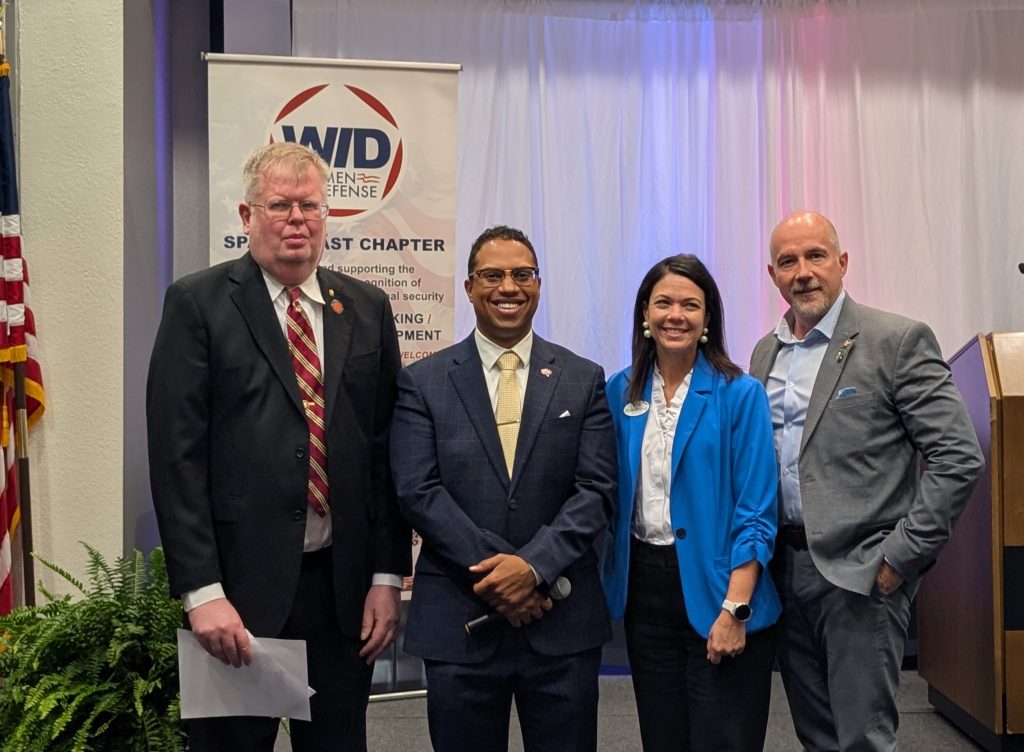
🎙️ Cordell Rolle Speaks at Space Coast Women In Defense Annual Awards Panel: CMMC, AI, and How to Stay Smart and Secure

At the Women In Defense Space Coast (WIDSC) Annual Awards Event, Rolle IT’s CEO Cordell Rolle joined an expert panel of cybersecurity and compliance leaders to unpack the evolving challenges of CMMC (Cybersecurity Maturity Model Certification) and Artificial Intelligence (AI). The panel brought together perspectives from across the industry and was expertly moderated by David Bragg from the University of Florida.

Cordell spoke alongside:

  • Reagan Edens, Chief Technologist and Founder at DTC Global
  • Elizabeth Huy, VP of Business Operations at Alluvionic
  • David Bragg, Moderator and Cybersecurity Programs Director, University of Florida

Together, they tackled some of the most urgent and nuanced topics facing the defense industrial base and government contractors today.


🔐 CMMC: Building a Culture of Compliance, Not Just Checking Boxes

The panel opened by reinforcing the mission behind CMMC:

“CMMC isn’t a hurdle — it’s a shield. It’s how we protect our nation’s supply chain, intellectual property, and the future of our industrial base.”

The panel addressed real-world concerns many small and mid-sized contractors face:

  • Confusion around what level of CMMC is required for subcontractors
  • Cost implications of CMMC Compliance and Assessments- which should have already been factored into contract prices
  • Companies looking to “just get compliant” without understanding the risk landscape

Cordell emphasized education and empowerment, not fear-mongering:

“We can’t just talk about compliance as a cost. It’s a capability. It tells our partners we’re ready, responsible, and reliable.”


🤖 AI & Compliance: Smart Technology Needs Smarter Boundaries

The conversation then shifted to Artificial Intelligence — one of the most anticipated and complicated topics of the evening.

Cordell discussed how AI can be a powerful force multiplier in cybersecurity, automating detection, correlation, and even response in ways humans can’t match. But he also cautioned against blind adoption:

“You can’t use just any AI tool in a compliant environment. You need to know exactly where your data is going — and who owns it once it leaves your network.”

One key insight from Cordell: Using AI within your controlled environment — not as an external, public tool — may be the only way to remain compliant under frameworks like CMMC, NIST 800-171, and DFARS.

He challenged companies to ask:

  • Is the AI processing data locally or in the cloud?
  • Is the model trained on your proprietary information — and if so, how is it secured?
  • Can you control retention, deletion, and auditability?
  • Who has access to your prompts, responses, and metadata?
  • How are permissions set for access to information within your environment?

“AI isn’t the enemy — it’s your responsibility. If you can’t explain where your information is going, then you’re not compliant. And you’re definitely not secure.”


🧠 Key Takeaways from the Panel

This year’s WIDSC event brought together government leaders, defense tech innovators, women in STEM, and cybersecurity trailblazers. Cordell’s message was clear:

CMMC compliance is achievable — if you start early and build smart habits
AI should be internalized, audited, and tested before use in sensitive environments
Zero trust applies to software too — especially those with autonomous learning
Education is the strongest defense — and free, public guidance must continue


💬 The Bigger Picture: Rolle IT Leads With Purpose

Cordell Rolle’s panel appearance reflects a broader principle at Rolle IT: We don’t just offer cybersecurity solutions — we help shape the cybersecurity conversation.

From supporting small DIB contractors to contributing on non-sponsored expert panels, Rolle IT shows up where it counts — with practical advice, not a sales pitch.

To learn more about how we support compliant AI adoption, CMMC readiness, and cyber risk reduction, visit us at https://rolleit.com.

Not Just Talking CMMC — Leading Efforts Read More »