DIB

Microsoft GCC High Licensing Costs

GCC High licensing is generally more expensive than both commercial and GCC environments due to the additional security controls, segregated infrastructure, and compliance assurances provided.

Cost drivers for GCC High include:

  • Specialized government cloud infrastructure
  • U.S.-based data residency and screened U.S. personnel access
  • Limited service availability compared to commercial environments
  • Increased administrative and operational overhead

GCC High licenses are available only after Microsoft eligibility approval and are typically procured through authorized government cloud resellers.


Security and Compliance Feature Considerations

Organizations should carefully evaluate which security and compliance features are required to meet contractual obligations.

Higher-tier licenses may be necessary to support:

  • Advanced threat detection and response
  • Identity governance and privileged access management
  • Audit logging and eDiscovery
  • Continuous compliance reporting

Selecting licenses without aligning them to compliance requirements can result in unexpected costs or gaps in control coverage.

Request your GCC or GCCH License Quote from [email protected]

Microsoft GCC High Licensing Costs Read More »

Understanding the Requirements to Qualify for Microsoft GCC and GCC High

Organizations that work with United States government agencies or handle sensitive government data often require cloud environments that meet elevated security and compliance standards. Microsoft offers two specialized government cloud environments to support these needs: Government Community Cloud (GCC) and Government Community Cloud High (GCC High).

While both environments are designed for regulated workloads, not every organization is eligible to use them. Understanding the qualification requirements is a critical first step before planning a migration or modernization effort.

This article outlines the eligibility criteria, documentation requirements, and compliance considerations for organizations seeking to adopt GCC or GCC High.


Overview of Microsoft Government Cloud Environments

Microsoft’s government cloud offerings are segmented to align with different levels of sensitivity and regulatory oversight.

GCC is designed for U.S. federal, state, local, and tribal government entities, as well as contractors that support them. GCC High is designed for organizations that handle highly sensitive data, including Controlled Unclassified Information (CUI), Federal Contract Information (FCI), and export-controlled data.

Each environment operates within separate infrastructure and enforces specific access, residency, and compliance controls.


Eligibility Requirements for Microsoft GCC

To qualify for Microsoft GCC, an organization must meet one or more of the following criteria:

  • Be a U.S. federal, state, local, or tribal government agency
  • Be a contractor or partner that supports U.S. government agencies
  • Be an organization that processes or stores government-regulated data on behalf of a public sector entity

In addition to organizational purpose, Microsoft requires that customers demonstrate a legitimate government use case for GCC services.

Verification and Documentation

Organizations seeking GCC access must complete Microsoft’s government cloud eligibility validation process. This typically includes:

  • Submission of organization details and government affiliation
  • Verification of contracts, grants, or partnerships with government entities
  • Validation of domain ownership and tenant information

Once approved, the organization may provision a GCC tenant and access supported Microsoft services within the government cloud environment.


Eligibility Requirements for Microsoft GCC High

GCC High has more stringent requirements due to the sensitivity of the data it is designed to protect.

To qualify for GCC High, an organization must meet at least one of the following conditions:

  • Be a U.S. federal agency or department
  • Be a defense contractor or subcontractor handling CUI or FCI
  • Be subject to regulations such as DFARS, ITAR, CMMC, or NIST SP 800-171
  • Handle export-controlled or law enforcement sensitive information

In addition, organizations must demonstrate that GCC High is required to meet contractual or regulatory obligations, not simply as a preference.

Citizenship and Data Residency Requirements

A defining characteristic of GCC High is that customer data is stored within the United States and managed by screened U.S. persons. Microsoft enforces strict access controls to ensure only authorized U.S. personnel can administer the environment.

Organizations must be prepared to align their own administrative access and support models with these requirements.


Contractual and Compliance Alignment

Eligibility alone is not sufficient to operate successfully in GCC or GCC High. Organizations must also demonstrate alignment with applicable compliance frameworks.

Common regulatory drivers include:

  • NIST SP 800-171 for protecting Controlled Unclassified Information
  • CMMC requirements for Defense Industrial Base contractors
  • DFARS clauses related to safeguarding government data
  • HIPAA and CJIS for organizations supporting healthcare or criminal justice workloads

Organizations should be prepared to map their security controls, policies, and procedures to these frameworks before and after migration.


Technical and Operational Readiness Considerations

Meeting GCC or GCC High requirements also involves operational readiness.

Organizations should evaluate their identity and access management practices, including the use of multi-factor authentication and privileged access controls. Endpoint security, logging, and incident response capabilities must align with government cloud expectations.

Additionally, not all third-party applications and integrations are compatible with GCC or GCC High. A thorough review of dependencies is required to avoid operational disruptions.


Approval Process and Timeline

Microsoft’s approval process for government cloud access is not instantaneous. Depending on organizational complexity and documentation readiness, approval can take several weeks.

Organizations should plan accordingly and avoid committing to aggressive migration timelines until eligibility has been confirmed and tenants are provisioned.


Common Misconceptions About GCC and GCC High

One common misconception is that any organization can choose GCC or GCC High for added security. In reality, access is restricted to organizations with verified government use cases.

Another misconception is that GCC High automatically ensures compliance. While the platform provides compliant infrastructure, organizations are still responsible for configuring controls, managing access, and maintaining compliance over time.


How Rolle IT Cybersecurity Helps Organizations Qualify and Succeed

Navigating GCC and GCC High eligibility can be complex, particularly for contractors and regulated organizations new to government cloud environments.

Rolle IT Cybersecurity assists organizations by validating eligibility, preparing documentation, aligning compliance requirements, and designing secure architectures tailored to GCC or GCC High. Our team supports organizations throughout the approval, migration, and operational phases to ensure long-term compliance and security.


Conclusion

Microsoft GCC and GCC High provide secure cloud environments tailored to the needs of government agencies and contractors, but access is limited to organizations that meet specific eligibility and compliance requirements.

By understanding qualification criteria, preparing documentation, and aligning security operations with regulatory standards, organizations can confidently adopt the appropriate government cloud environment to support their mission.

Organizations considering GCC or GCC High should engage experienced security and compliance partners early to reduce risk and accelerate success.

Important Notes on Eligibility Determination

  • Eligibility is determined by Microsoft and requires formal validation.
  • Preference for enhanced security alone is not sufficient justification.
  • Approval timelines may vary depending on documentation readiness and organizational complexity.
  • Eligibility does not guarantee compliance; proper configuration and ongoing governance are required.

Understanding the Requirements to Qualify for Microsoft GCC and GCC High Read More »

Best Practices for Implementing Microsoft GCC High

A Guide for Defense Contractors

Executive Summary

Organizations that handle sensitive government information are increasingly required to meet stringent cybersecurity and compliance standards while maintaining operational efficiency. Microsoft Government Community Cloud High, known as GCC High, is designed to support these requirements by providing a secure, sovereign cloud environment for United States government agencies and authorized contractors. Rolle IT helps appropriate organizations procure and deploy GCC High environments.

Successful implementation of GCC High requires more than technical migration. It demands a structured approach that integrates compliance frameworks such as NIST SP 800-171 and CMMC, strong identity and access controls, secure configuration standards, and continuous monitoring. This document outlines best practices to help organizations deploy GCC High in a manner that is secure, compliant, and sustainable.

By following these practices, organizations can reduce risk, maintain audit readiness, and enable secure collaboration for users handling Controlled Unclassified Information and Federal Contract Information.


Understanding GCC High and Its Purpose

Microsoft GCC High is a sovereign cloud environment built specifically for United States government agencies and authorized contractors. It supports compliance with frameworks and regulations such as DFARS, CMMC, NIST SP 800-171, ITAR, CJIS, and HIPAA. The environment features segregated infrastructure, enhanced access controls, and United States-based data residency.

Due to its elevated security posture, GCC High deployments require deliberate design decisions to ensure both compliance and usability.


Conduct a Compliance-Driven Readiness Assessment

Prior to implementation, organizations should perform a readiness assessment focused on compliance and risk.

Key areas to evaluate include data classification, regulatory obligations, and the current technical environment. This includes identifying where Controlled Unclassified Information and Federal Contract Information reside, determining which compliance frameworks apply, and reviewing identity, endpoint, and network security controls already in place.

This assessment provides the foundation for a GCC High architecture aligned with both security and business requirements.


Establish Strong Identity and Access Controls

Identity is the cornerstone of a secure GCC High environment. Organizations should implement Azure Active Directory Conditional Access policies to enforce access based on user risk, device compliance, and contextual factors. Multi-factor authentication should be enabled for all users without exception.

Privileged access should be tightly controlled using role-based access control and Privileged Identity Management. Administrative roles should be segmented to reduce the risk of unauthorized access and insider threats.


Apply Secure Configuration and Hardening Standards

Although GCC High includes enhanced default protections, additional hardening is essential.

Organizations should apply Microsoft-recommended security baselines for GCC High workloads and adopt Zero Trust principles that continuously verify user identity, device health, and application context. Endpoint security should be enforced using tools such as Microsoft Defender for Endpoint and Intune to ensure devices accessing GCC High resources meet compliance requirements.

Implementing secure configurations early helps avoid operational disruptions and costly remediation later.


Plan and Sequence Workload Migrations Carefully

Not all workloads are immediately suitable for GCC High. Organizations should define a phased migration strategy that prioritizes critical services such as email, collaboration tools, and document management systems.

Dependencies on third-party applications should be reviewed carefully, as some vendors may not support GCC High environments without modification. Custom applications may require redesign or reconfiguration to integrate securely.

A phased approach reduces risk and minimizes disruption to business operations.


Implement Robust Data Governance Controls

Data governance is essential for maintaining compliance and protecting sensitive information.

Organizations should use sensitivity labels to identify and protect Controlled Unclassified Information, enforce retention and deletion policies, and ensure encryption is applied appropriately. Legal hold, eDiscovery, and audit capabilities should be validated prior to production use.

Effective data governance supports both regulatory compliance and operational accountability.


Validate the Environment Through Testing

Before full production deployment, organizations should conduct thorough testing using real-world scenarios.

This includes piloting GCC High access with select user groups, validating collaboration workflows, and testing security controls. Threat simulations and tabletop exercises help verify incident response procedures and monitoring effectiveness.

Testing ensures the environment performs as expected and supports secure day-to-day operations.


Provide Training for Users and Administrators

Security controls are only effective when users and administrators understand how to operate within them.

End users should receive training on secure collaboration, phishing awareness, and multi-factor authentication usage. Administrators should receive advanced training on identity governance, security monitoring, and compliance management.

Clear documentation and operational playbooks should be developed to support onboarding, incident response, and audits.


Operationalize Continuous Monitoring and Threat Detection

GCC High provides extensive logging and telemetry, but organizations must actively monitor and respond to security events.

Security operations should include continuous monitoring through Microsoft Defender and Microsoft Sentinel, real-time alerting for suspicious activity, and routine reviews of access and configuration changes.

Ongoing monitoring ensures threats are identified and addressed before they impact sensitive systems.


Maintain Continuous Compliance Posture

Compliance is not a one-time effort. Organizations should regularly assess their control posture against applicable frameworks such as NIST SP 800-171 and CMMC.

Compliance dashboards, control mappings, and periodic reviews help maintain audit readiness and identify gaps early. Policies and configurations should be updated as regulations and threat landscapes evolve.


Engage Experienced GCC High Security Partners

Implementing and operating GCC High requires expertise across cloud architecture, cybersecurity, and regulatory compliance. Many organizations benefit from working with partners experienced in securing government and defense workloads.

Rolle IT Cybersecurity supports government agencies and federal contractors by delivering GCC High readiness assessments, secure architecture design, workload migration, and continuous security monitoring aligned with federal compliance requirements.


Microsoft GCCH Deployment

Microsoft GCC High provides a powerful platform for protecting sensitive government data, but its effectiveness depends on thoughtful implementation and disciplined operations. By following structured best practices across identity, security configuration, governance, and monitoring, organizations can achieve compliance while enabling secure, modern collaboration.

For organizations seeking to implement or optimize GCC High, Rolle IT Cybersecurity offers the expertise and operational support required to secure mission-critical environments.

[email protected] 321-872-7576

Best Practices for Implementing Microsoft GCC High Read More »

DoD’s 48 CFR Final Rule Reaches OIRA Review & is Cleared

On July 22, 2025, the Department of Defense took a major step toward finalizing its long-anticipated 48 CFR (DFARS) rule implementing the Cybersecurity Maturity Model Certification (CMMC). The rule was officially submitted to the Office of Information and Regulatory Affairs (OIRA) for interagency review.

This submission marks the last checkpoint before the rule is published in the Federal Register and becomes binding on contractors. Once cleared by OIRA, DoD can move forward with inserting the updated DFARS requirements into new solicitations and contracts.

What Comes Next

  • OIRA Review: OIRA cleared it on August 25, 2025. 
  • Federal Register Publication: The rule will be published in the Federal Register along with an official effective date. Federal regulations generally become enforceable within 1 to 60 days of publication.
  • Contract Implementation: Contractors can expect DFARS clauses referencing the CMMC requirements to begin appearing in solicitations as early as late 2025.

Why It Matters

This milestone carries real implications for defense contractors. Once the rule takes effect, companies that lack a CMMC-certified environment may find themselves ineligible to win or execute DoD contracts. It won’t be enough to have plans in place—contracting officers will need assurance that sensitive Department of Defense work is performed within a secure, certified environment.

For many small and mid-sized businesses, this could mean the difference between maintaining a foothold in the Defense Industrial Base or being locked out of future opportunities. Companies that have delayed compliance run the risk of being passed over in favor of competitors who are audit-ready.

Final Thought

For defense contractors, this is the clearest signal yet that CMMC compliance is no longer optional or “someday.” With the rule in OIRA’s hands, the countdown to enforcement has begun. Contractors handling Controlled Unclassified Information (CUI) should ensure their NIST 800-171 controls are implemented, documented, and verifiable inside a certified environment.

DoD’s 48 CFR Final Rule Reaches OIRA Review & is Cleared Read More »

Not Just Talking CMMC — Leading Efforts

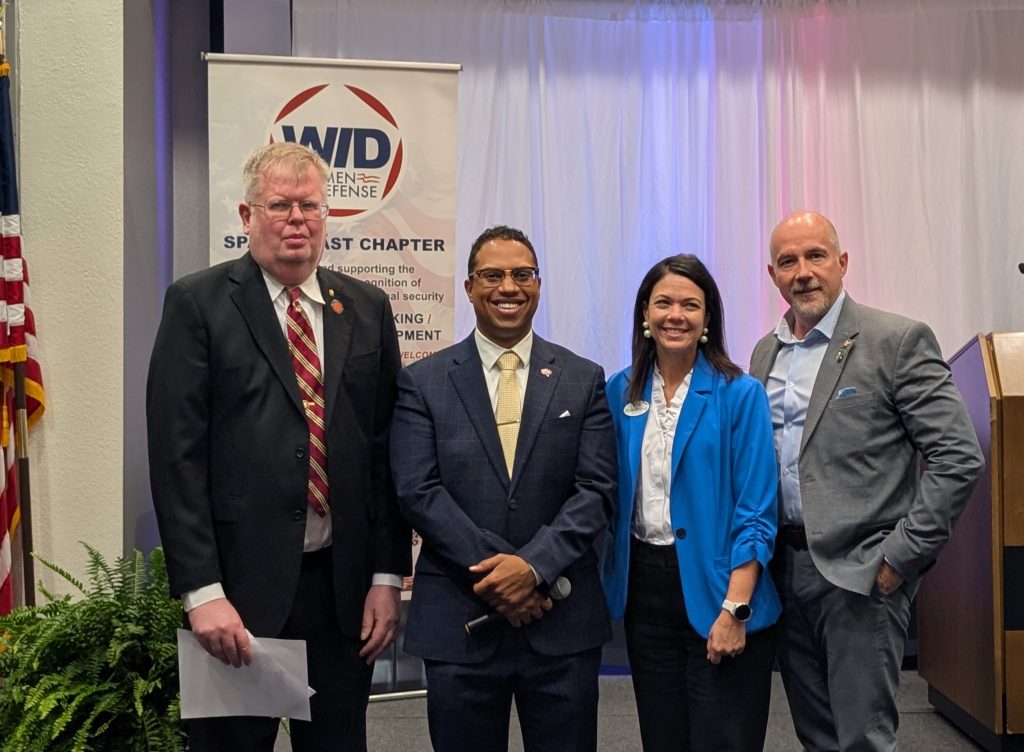
🎙️ Cordell Rolle Speaks at Space Coast Women In Defense Annual Awards Panel: CMMC, AI, and How to Stay Smart and Secure

At the Women In Defense Space Coast (WIDSC) Annual Awards Event, Rolle IT’s CEO Cordell Rolle joined an expert panel of cybersecurity and compliance leaders to unpack the evolving challenges of CMMC (Cybersecurity Maturity Model Certification) and Artificial Intelligence (AI). The panel brought together perspectives from across the industry and was expertly moderated by David Bragg from the University of Florida.

Cordell spoke alongside:

  • Reagan Edens, Chief Technologist and Founder at DTC Global
  • Elizabeth Huy, VP of Business Operations at Alluvionic
  • David Bragg, Moderator and Cybersecurity Programs Director, University of Florida

Together, they tackled some of the most urgent and nuanced topics facing the defense industrial base and government contractors today.


🔐 CMMC: Building a Culture of Compliance, Not Just Checking Boxes

The panel opened by reinforcing the mission behind CMMC:

“CMMC isn’t a hurdle — it’s a shield. It’s how we protect our nation’s supply chain, intellectual property, and the future of our industrial base.”

The panel addressed real-world concerns many small and mid-sized contractors face:

  • Confusion around what level of CMMC is required for subcontractors
  • Cost implications of CMMC Compliance and Assessments- which should have already been factored into contract prices
  • Companies looking to “just get compliant” without understanding the risk landscape

Cordell emphasized education and empowerment, not fear-mongering:

“We can’t just talk about compliance as a cost. It’s a capability. It tells our partners we’re ready, responsible, and reliable.”


🤖 AI & Compliance: Smart Technology Needs Smarter Boundaries

The conversation then shifted to Artificial Intelligence — one of the most anticipated and complicated topics of the evening.

Cordell discussed how AI can be a powerful force multiplier in cybersecurity, automating detection, correlation, and even response in ways humans can’t match. But he also cautioned against blind adoption:

“You can’t use just any AI tool in a compliant environment. You need to know exactly where your data is going — and who owns it once it leaves your network.”

One key insight from Cordell: Using AI within your controlled environment — not as an external, public tool — may be the only way to remain compliant under frameworks like CMMC, NIST 800-171, and DFARS.

He challenged companies to ask:

  • Is the AI processing data locally or in the cloud?
  • Is the model trained on your proprietary information — and if so, how is it secured?
  • Can you control retention, deletion, and auditability?
  • Who has access to your prompts, responses, and metadata?
  • How are permissions set for access to information within your environment?

“AI isn’t the enemy — it’s your responsibility. If you can’t explain where your information is going, then you’re not compliant. And you’re definitely not secure.”


🧠 Key Takeaways from the Panel

This year’s WIDSC event brought together government leaders, defense tech innovators, women in STEM, and cybersecurity trailblazers. Cordell’s message was clear:

CMMC compliance is achievable — if you start early and build smart habits
AI should be internalized, audited, and tested before use in sensitive environments
Zero trust applies to software too — especially those with autonomous learning
Education is the strongest defense — and free, public guidance must continue


💬 The Bigger Picture: Rolle IT Leads With Purpose

Cordell Rolle’s panel appearance reflects a broader principle at Rolle IT: We don’t just offer cybersecurity solutions — we help shape the cybersecurity conversation.

From supporting small DIB contractors to contributing on non-sponsored expert panels, Rolle IT shows up where it counts — with practical advice, not a sales pitch.

To learn more about how we support compliant AI adoption, CMMC readiness, and cyber risk reduction, visit us at https://rolleit.com.

Not Just Talking CMMC — Leading Efforts Read More »

The CMMC Tsunami: How Ripples Became Waves—and Now a Storm Threatens the Defense Industrial Base

Rolle IT Cybersecurity, CMMC Experts, CMMC Consulting CAAS

Far offshore, deep under the ocean, a powerful shift occurs—an earthquake, a volcanic eruption, or a landslide.
At first, the surface looks almost calm.
There’s no immediate towering wall of water.
Just a subtle change: a slight pull of the tide, a few ripples moving outward.

But beneath the surface, an unstoppable force has been unleashed.
A massive surge of energy races silently across the water at hundreds of miles per hour. As it approaches land, the seafloor rises. The wave, once almost invisible, grows into a towering wall of water.

When a tsunami hits, it doesn’t just flood the coastline—it redraws it.
Entire towns are swept away.
Harbors are wiped clean.
The landscape is forever altered, and only the most prepared—or the highest ground—survives intact.

Tsunamis are not ordinary storms.
They are transformational forces.


Now, across the Defense Industrial Base (DIB), another tsunami is approaching—not made of water, but of regulation, enforcement, and cybersecurity evolution.
This tsunami is called CMMC (Cybersecurity Maturity Model Certification).

The warning signs have been there. The ripples started years ago.

The only question left is: Will you be ready when it hits?


🌱 The First Ripples: Early Warnings Ignored

Years ago, the Department of Defense (DoD) recognized a growing threat: foreign adversaries were targeting the U.S. through the supply chain. Sensitive defense information was bleeding out through small and mid-sized contractors who lacked robust cybersecurity.

In response, early guidance like NIST SP 800-171 and DFARS 7008 & 7012 requirements were issued. These policies were the first ripples—small movements in the water that signaled a shift in expectations. While many companies unknowingly drifted closer to this impending disaster, each DFARS 7008 and 7012 clause they signed legally obligated them to have already fully implemented NIST 800-171 standards. These contractual commitments weren’t mere bureaucratic formalities—they were early tremors, subtle but undeniable confirmations of the seismic event beneath the surface. Those early ripples, largely ignored or misunderstood, were legal liabilities accumulating beneath calm waters, now coalescing into the regulatory tsunami known as CMMC.

But many companies treated these requirements as minor disturbances. Some completed a checklist. Some promised improvements without making real changes, some attested to NIST 800-171 compliance without knowing a thing about it. And others simply ignored the warnings altogether, anchored by the belief that bigger threats only happen to bigger ships.

The ripples were there. But few adjusted their course. 


🌊 The Rising Waves: CMMC Begins to Form

As data breaches multiplied and cyberattacks grew more sophisticated, the ripples grew into undeniable waves.
The Department of Defense realized more dramatic action was needed to protect national security.

Thus, the Cybersecurity Maturity Model Certification (CMMC) was born.

No longer would companies self-attest to their cybersecurity practices.
Third-party assessments would now be required to prove compliance.
Without certification, companies would be barred from executing on defense contracts.

The water was no longer gently stirring. It was rising.

And those waves carried with them a heavy message: Adapt or be cast adrift.


💥 The Earthquake Beneath: A Tectonic Shift in the DIB

Many companies didn’t notice it—but while they worked through proposals and deliveries, a massive earthquake rumbled far beneath the surface.

  • Threat actors were becoming state-sponsored and far more sophisticated.
  • Legislative pressure was mounting on the DoD to shore up its vulnerabilities.
  • Public trust in the resilience of the U.S. defense supply chain was beginning to erode.

This earthquake is what triggered the tsunami—the seismic force of CMMC requirements reshaping the entire defense contracting landscape.

By the time the first wall of water appears on the horizon, it’s already too late for last-minute scrambling. The energy unleashed cannot be stopped—it can only be anticipated and prepared for.


🌊🌊🌊 The Tsunami Approaches: What Happens Next?

The full enforcement of CMMC is not a distant possibility—it is an inevitable, crashing wave speeding toward the DIB.

Companies that fail to adapt will face existential consequences:

  • Loss of Contracting Opportunities: Without certification, companies will be disqualified from defense projects.
  • Reputational Damage: A company caught unprepared signals unreliability not just to the DoD, but to prime contractors and teammates.
  • ⚖️ Whistleblowers, False Claims Act, and Cybersecurity Noncompliance
    • False cybersecurity certifications are no longer a hidden risk. They are ticking time bombs.” – U.S. Department of Justice
    • Under the False Claims Act (FCA), companies that submit false information to the government—or falsely certify compliance with federal regulations—can be sued for massive damages.
      And cybersecurity compliance is now a major target.
    • In fact, the Department of Justice launched the Civil Cyber-Fraud Initiative in 2021, focusing specifically on holding contractors accountable when they:
      • Knowingly misrepresent their cybersecurity practices,
      • Fail to report breaches,
      • Or falsely claim they meet contract requirements like DFARS or CMMC preconditions.
    • 🔹 Example: In 2022, Aerojet Rocketdyne settled for $9 million after a whistleblower (their former cybersecurity executive) alleged that the company failed to comply with DFARS cybersecurity clauses—even though they were required to under federal contract terms (DOJ announcement).
    • 🔹 Key point: Individual employees—not just agencies—can trigger these lawsuits.
      Under the FCA’s qui tam provisions, whistleblowers are entitled to a portion of any recovered settlement.
    • In the context of CMMC, if a company falsely claims readiness or compliance to win a defense contract, they could face millions of dollars in penalties—and public reputation damage that is even harder to repair.
  • Financial Loss: Losing access to defense contracts could cripple companies, especially small and mid-sized firms that depend on this business.

This isn’t just a compliance checkbox. It’s an industry-wide rearrangement—a reshaping of who stays and who goes.

The coastline will be forever altered.


🛡️ Preparing for the Tsunami: Riding the Wave, Not Fighting It

The good news?
You can survive.
You can thrive.

But only if you start moving now.

Preparation looks like:

  • Understanding your CUI
  • Understanding your current cybersecurity posture
  • Developing robust System Security Plans (SSPs) and Plans of Action and Milestones (POA&Ms).
  • Engaging early with experts who can guide your certification journey.
  • Building a cybersecurity-first culture within your organization—before it’s forced upon you.

The organizations that prepare now will not only survive the tsunami—they’ll be the new leaders in the reshaped Defense Industrial Base.

Those who treat CMMC as an opportunity, not a burden, will rise with the wave.

The CMMC Tsunami: How Ripples Became Waves—and Now a Storm Threatens the Defense Industrial Base Read More »

Rolle IT at VETS25

Rolle IT Cybersecurity will be on the ground at VETS25 in Orlando May 13–16, and we’re looking forward to connecting with you! 🎉 Find us at Booth 807 and discover how our expert IT services and cybersecurity solutions can help support your mission.

Whether you’re looking to strengthen your IT infrastructure, explore innovative cybersecurity strategies, achieve and maintain CMMC Compliance, or discuss partnership and teaming opportunities, we’re ready to connect and collaborate.

👉 Schedule time with our team to dive deeper into your IT needs
👉 Stop by Booth 807 to meet us, learn more, and see how Rolle IT can be a valuable asset to your success

We look forward to seeing you there and working together to build stronger, smarter solutions!

hashtag#VETS25 hashtag#Cybersecurity hashtag#ITServices hashtag#TeamingOpportunities hashtag#RolleIT hashtag#VeteranEntrepreneurs hashtag#CMMC hashtag#MSSP hashtag#MSP hashtag#DIB

Cordell Rolle Rolle IT at VETS25 MSSP

Rolle IT at VETS25 Read More »

🚨 Why I built this timeline: My goal was simple…to warn and serve the Defense Industrial Base.

By Grant Mooney, CCP

🚨 Why I built this timeline: My goal was simple…to warn and serve the Defense Industrial Base.

I’ve spent the last few weeks working a lot… digging through over 20 years of DoD policy, DFARS clauses, Congress Mandates, NIST standards, and real world NIST 800-171 Lawsuit cases. Too many companies still think CMMC is “just a future contract checkbox.” It’s not.
It’s already a survival issue,

📉 If your business depends on DoD contracts and you haven’t finished implementing NIST 800-171, you’ve already missed the deadline: December 31, 2017!
📍 YOU ARE HERE — in the Death of the Old DiB. The “Great Disqualification” begins soon. Primes are already flowing down Level 2 requirements. If you don’t have a certificate or a plan, you’re already losing opportunities.
🎰 If you’re just now starting to take this seriously in Q2 2025, as a company, you’re a High Stakes Gambler. You’re betting everything on 12–24 months of implementation work in a shrinking window. Many won’t make it.
❌ Others will end up like the DoD Dumped Company on this timeline—disqualified, replaced, or acquired.
✅ But there’s still time to get ahead. I’ve heard the early movers landing more work, closing stronger teaming deals, and becoming go-to suppliers because they got certified while others waited.

This timeline is a warning. It’s also a roadmap. If you’re unsure where your company stands, or how to start, reach out. I’m here to help.

#CMMC

#NIST800171

#DFARS

#CyberCompliance

#DoD

#GovCon

#DIB

#BusinessRisk

hashtag

#FalseClaimsAct

🚨 Why I built this timeline: My goal was simple…to warn and serve the Defense Industrial Base. Read More »

Rolle IT March 2025

We’re proud to have been represented at FIVE incredible events this March, connecting with industry leaders, sharing our expertise, and staying at the forefront of cybersecurity, compliance, and managed services.

📍 From regional summits to national conferences, Rolle IT showed up, shared insights, and strengthened relationships with partners and clients alike.

💬 Whether it was discussing the future of MSSPs, diving into CMMC compliance strategies, supporting our local community, or showcasing our proactive approach to IT and cybersecurity—March proved why Rolle IT continues to be a trusted voice in the industry.

+Rolle IT attended SOFWERX Small Business Bootcamp An energizing few days of collaboration, innovation, and insight—connecting with government leaders, tech experts, and fellow small businesses all driving mission-focused solutions. Great CMMC Presentation and Questions and Answers from the audience by Project Spectrum.

+Celebrating WeVENTURE’s Women Who Rock Awards as a sponsor. It was an energizing and engaging luncheon shining a spotlight on local women who are accomplishing remarkable feats and leading through their actions. 

+Director of Security Scott Kinnebrew was the featured speaker at ISC2 Florida Space Coast March Meeting, focusing on CMMC and the Role of Security Standards in Modern Cybersecurity.

+Ashleigh Caswell, VP of Commercial Services is also Secretary for AFCEA Space Coast Chapter that hosted an insightful event at The Tides, Patrick SFB, featuring COL Shannon DaSilva, STARCOM, whose expertise, engaging presence, and strategic perspective provided invaluable takeaways for industry and government partners. Her ability to convey complex challenges while fostering open dialogue highlighted her reputation as a visionary leader in space operations.

+CEO Cordell Rolle was a member of a very distinguished CEO panel Navigating Government Contracting at The Vertex Expo at FIT organized by , WeVenture alongside Alluvionic CEO Wendy Romeu and 8Koi CEO Inga Young, they shared their government contracting journey and success in scaling.

🙌 Huge thanks to the organizers, attendees, and everyone who made these events a success.

Onward and upward—see you at the next one!

#RolleIT #Cybersecurity #MSSP #CMMC #ITLeadership #ComplianceExperts #ITSecurity #DevSecOPs #spacecoast #DIB

Rolle IT March 2025 Read More »

Cui-Con 2025- Rolle IT

The Rolle IT Cybersecurity Team at Cui-Con 2025: Key Takeaways from the CMMC Ecosystem Event

Rolle IT just wrapped up another great trip to CUI-CON. One of the biggest benefits of attending CUI-CON is the opportunity to interact and hear from the relatively small circle of people who truly understand the CMMC universe and, in many instances, were some of the founding influences in the space. These are the people who have been thinking about what CMMC is and should be for almost a decade, while most of us have only been paying attention to it for a few years. This matters because there is so much fluff and misinformation in the system surrounding CMMC.

We had the chance to discover the latest trends in CMMC implementation and the new, innovative tools available that help all of us manage our certification journeys more efficiently and effectively. This space is still quite young and changing rapidly, so it was great to see many new products and, potentially, forge new relationships that will help our clients succeed.

And speaking of clients, it is always so important and eye-opening to meet new businesses and hear what their challenges and needs are. Of course, we hope to be able to help them in their journey to compliance. But even if they are not new clients, hearing their lessons learned and the challenges that they face help us to understand how to better serve our clients in the future. The reality is that most companies pursuing CMMC alone are significantly underprepared for a Level 2 CMMC assessment and would struggle to achieve a positive SPRS score based on recent conversations.

Rolle IT CUI-Con 2025 CMMC Sponsor

CUICON is an intense, fast-paced environment in which every minute is an opportunity to sharpen your CMMC implementation gameplan. But it is also a fun time to make new friends and reconnect with old ones. But now, it’s back to work with a renewed sense of the importance of the task at hand. But one that feels a little smaller now. CMMC requires allies. Come join us. Contact our Security Team Here

Key Highlights from Cui-Con 2025

1. Expert Panels and Engaging Discussions

The discussions provided actionable insights into the evolving regulatory requirements and how companies can stay ahead of the curve. Our team found tha the presentations were far more targeted than other conferences, addressing key CMMC rollout challenges facing the DIB. Rolle IT’s CCPs found a lot of value in the increased clarity and guidance from industry leaders.

2. Mock Assessment – A Realistic Compliance Experience

One of the most impactful aspects of Cui-Con was the mock assessment sessions, so great to be a part of that robust Q&A. Assessors are not the enemy!

3. Interactive Q&A Sessions

The audience at Cui-Con 2025 came prepared with insightful questions, fostering meaningful discussions with panelists and experts. Attendees were eager to dive into the nuances of compliance challenges, cyber threat mitigation, the role third party providers, and partnerships in maintaining security postures. The openness and willingness of the speakers to engage in constructive and lighthearted discussion was so fun to be a part of.

4. Approachable and Knowledgeable Speakers

The caliber of speakers at Cui-Con 2025 was exceptional. Experts from the Cyber AB, CMMC Third-Party Assessment Organizations (C3PAOs), Third party providers, and cybersecurity firms shared their knowledge and perspectives on the future of compliance. Their accessibility and willingness to provide guidance underscored the collaborative spirit within the CMMC ecosystem.

5. Networking and Collaboration Opportunities

Beyond the sessions, Cui-Con provided numerous opportunities to connect with peers, industry leaders, and potential partners. The conversations we had with other cybersecurity professionals, clients, industry peers, and partners reaffirmed the shared goal of strengthening supply chain security and ensuring that federal contractors are prepared for the challenges ahead.

6. Caution and Due Dilligence

Rolle IT CCP Grant Mooney found that misinformation and mixed messages are still rampant, especially from both product and service providers.

“Every company is trying to sell a product or service, but there’s still not nearly enough focus on actual implementation consulting. As Rolle IT’s Lead CMMC-CCP Consultant, I see companies both overbuying on infrastructure and security tools and others vastly underestimating the complexity of passing a CMMC Level 2 audit. You cannot package CMMC into a box, nor should most companies try to meet all controls internally unless they have the expertise and financial foundation to do so. If you can handle it internally, great—but in my experience, almost every organization benefits from working with a CMMC-aware ESP. Don’t just buy GCC High because a Microsoft rep told you to, and don’t assume pre-written policies alone will get you compliant even if the person selling policies tells you they will. Spending your money the right way in this journey is essential. Take the time to truly understand this massive upcoming shift and determine whether you need consulting or external support.”

Moving Forward with CMMC Readiness

Attending Cui-Con 2025 reinforced the importance of proactive cybersecurity strategies in achieving and maintaining CMMC compliance. The insights gained from this event will enable us to better support our clients as they navigate the complexities of the compliance process. It’s clear from the audience questions, that no two organizations are the same and organizations need to leverage custom solutions to meet CMMC requirements and minimize any impacts on their business operations

At Rolle IT Cybersecurity, we remain committed to staying at the forefront of CMMC developments and helping organizations implement and maintain robust security frameworks. Whether you’re preparing for an upcoming assessment or seeking guidance on maintaining compliance, our team is here to help. Good Luck! Reach out to us if you want our help.

Big Thanks to Fernando Machado and Matthew Titcombe for organizing this event year after year! Looking forward to year #4! Cui-Con 2025, a premier CMMC ecosystem event bringing together industry leaders, organizations seeking assessment, and professionals dedicated to supporting federal contractors in achieving and maintaining CMMC compliance. The event was packed with insightful panels, engaging discussions, and invaluable networking opportunities that deepened our understanding of the evolving CMMC landscape and strengthened our partner relationships

If you missed Cui-Con 2025 or want to learn more about how we can assist in your CMMC journey, contact us today! CMMC @ RolleIT.com 321-872-7576

CUI-CON 2025 Rolle IT Sponsor

Cui-Con 2025- Rolle IT Read More »